 Share

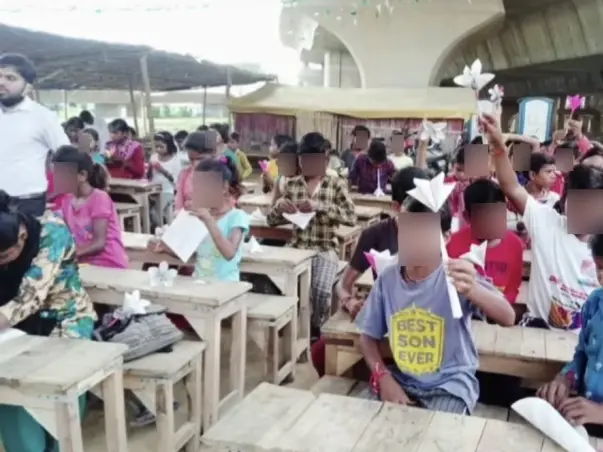
Many children of migrant and adivasi families living in slums on the banks of the Yamuna in Delhi's Mayur Vihar area drop out of school early. The main barriers to them completing their education are family financial pressures (e.g., they are needed to supplement household income or help with housework) and in some cases, a lack of documentation.
Even when the children want to return to school, doing so is difficult for two reasons. First, they cannot re-enroll in a lower grade that doesn't correspond to their age; policy requires placement with their age group. Second, because they have missed years of content, they are not prepared to succeed at the grade that does match their age. As a result, most stay out of school.
The Need
Children who have dropped out need two things. First, they need customized, highly personalized teaching that starts by understanding the actual learning level of each child, and then helps them catch up — i.e., bridge education. Second, they need counseling and role models from their own community to help rebuild their confidence and motivation. Depending on their age and circumstances, the goal is either to re-enroll them in school or to prepare them to pass the 10th or 12th grade exams through the National Institute of Open Schooling (NIOS).
What We Are Doing
As an initial pilot program, we conducted a household survey followed by calls with families and identified 20 children who have dropped out early and meet two criteria: they are eager to learn, and their families are willing to support them in returning to education.
We need funds to teach, mentor and support these 20 children for this year. We have attached de-identified details of each child, when they dropped out, their goal, etc.
Our NGO, Navyug Sanskriti Foundation, is spearheaded by Vikram, who has spent over a decade in this community. He began teaching for free in 2013 and by 2020 had built Vanpool Pathshala, a flyover school reaching nearly 300 children, which was demolished by authorities in 2023 (see coverage here: https://thepatriot.in/reports/rising-from-the-rubble-33882). This taught us the real gap was a stable space and formal structure. Shrishti, a lawyer who also taught at Vanpool Pathshala, handles legal and documentation work — critical for children who dropped out without records. Smitha and Mihir have both spent several years managing government-partnered research at J-PAL and LEAD at Krea, and are advising Navyug on fundraising and strategy. This is a funded, structured version of work with a track record (see attached success stories); now with a stable classroom, a curriculum tied to NIOS, and better outcome tracking. See all our CVs attached as files.
A stable classroom: rent and furniture for a proper, secure space for the year, rather than the informal, exposed setups (like under a flyover) that proved vulnerable to demolition and disruption in the past NIOS enrolment fees for exams Teacher stipends Learning materials (books, etc.)
How We Ensure We Are Using the Money Well