

 Share
Share

About Holématthi Nature Foundation -
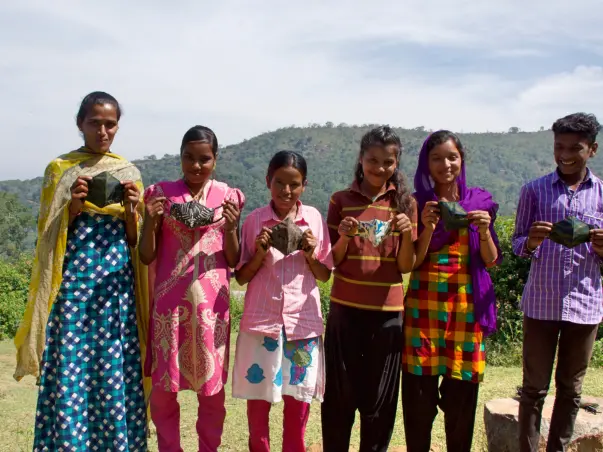
HNF aims to help reduce forest-fringe communities’ dependency on forest resources and the corresponding chance wildlife encounters while empowering them by introducing a sustainable alternative livelihoods project. With this purview in mind, we’ve been running the alternative livelihoods program with the local women in the Kokkabare village in the MM Hills Wildlife Sanctuary, who have now been trained in making cloth masks and bags. Our aim is to expand the project to villages in or around these Protected Areas grappling with the same issues. At the moment, we are in the process of identifying other villages in the same region where we plan to launch the alternative livelihoods programme.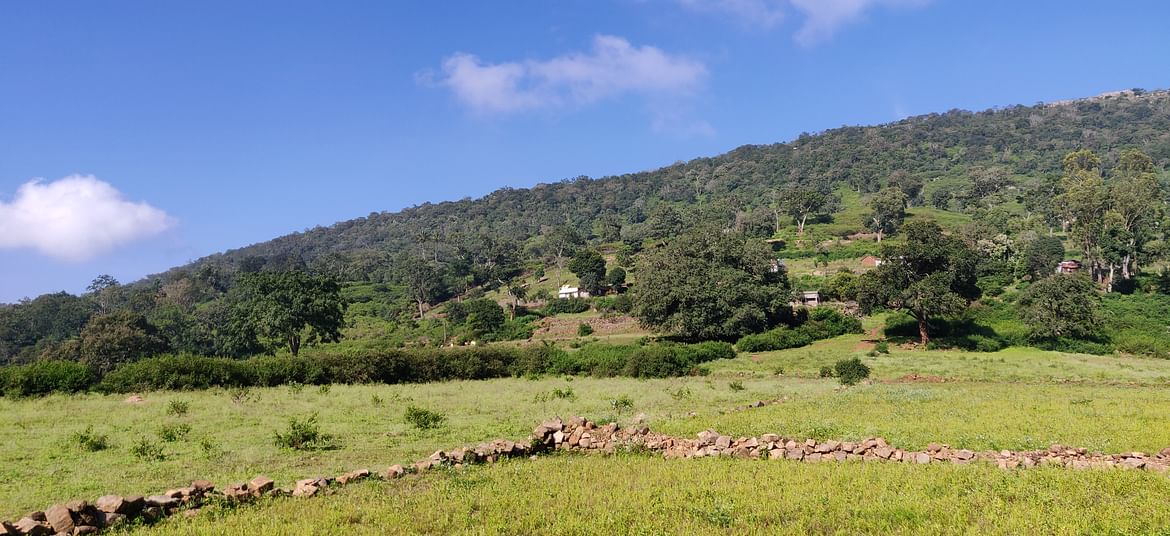
The need for an Alternative Livelihood Project -
Baseline surveys show that the people here, especially the women, either opportunistically work for daily wages in larger agricultural fields, or more commonly collect dwarf date palm fronds from the forests to make brooms to sell. Incidentally, this species of palm is also consumed by wild herbivores such as elephants, gaur, sloth bear, sambar and others.
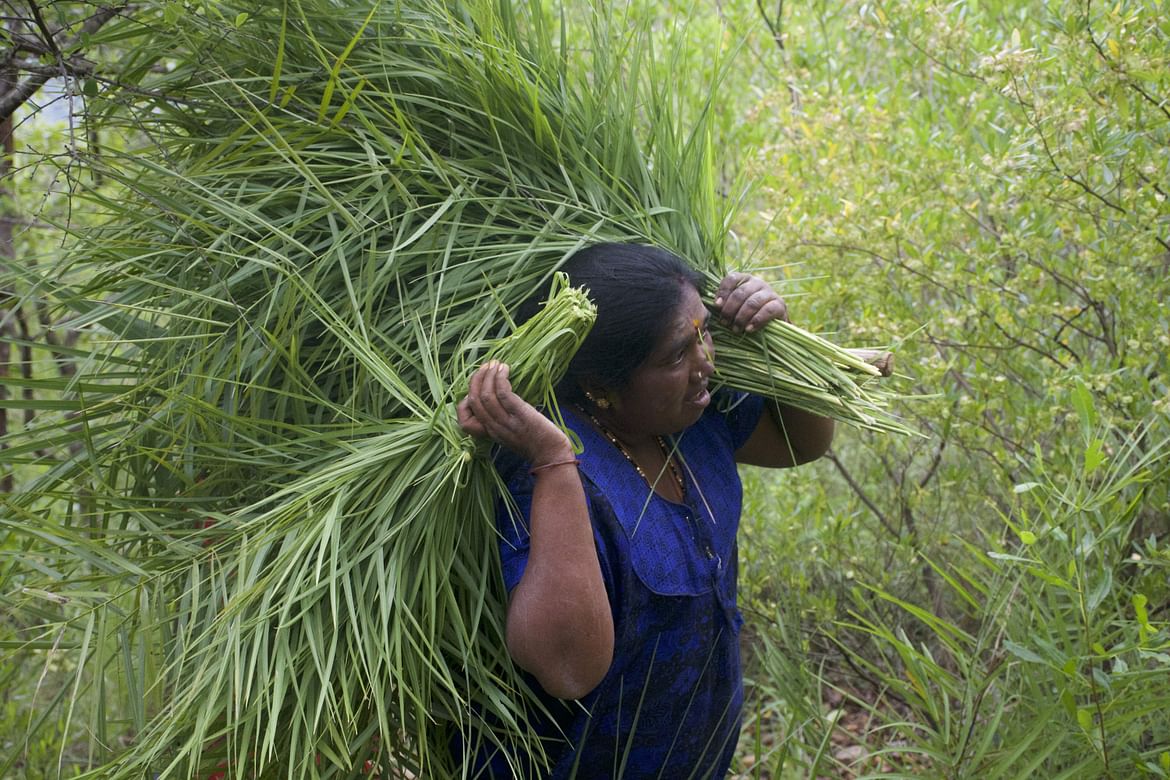 To harvest these seasonal grasses, women have to venture into the forests several times a week, increasing the risk of chance encounters with wild animals that also occupy that space, resulting in human-wildlife conflict.
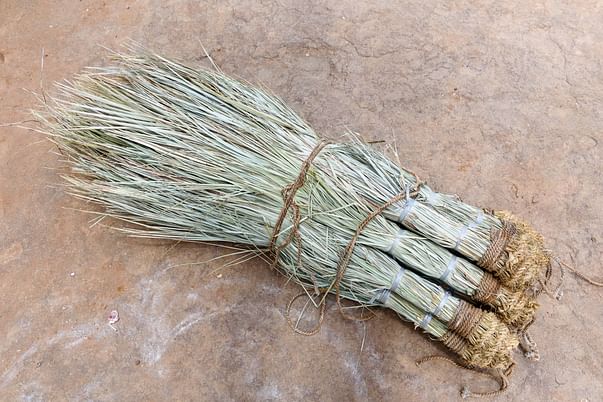 Selling brooms brings in a small amount of income, a sum not nearly enough to compensate for the arduous effort of navigating uneven terrains in the harsh weather, through the forests and risking chance interactions with wildlife. Additionally, this is a seasonal income limited to a harvest period right after the monsoons when the palm grows luxuriantly.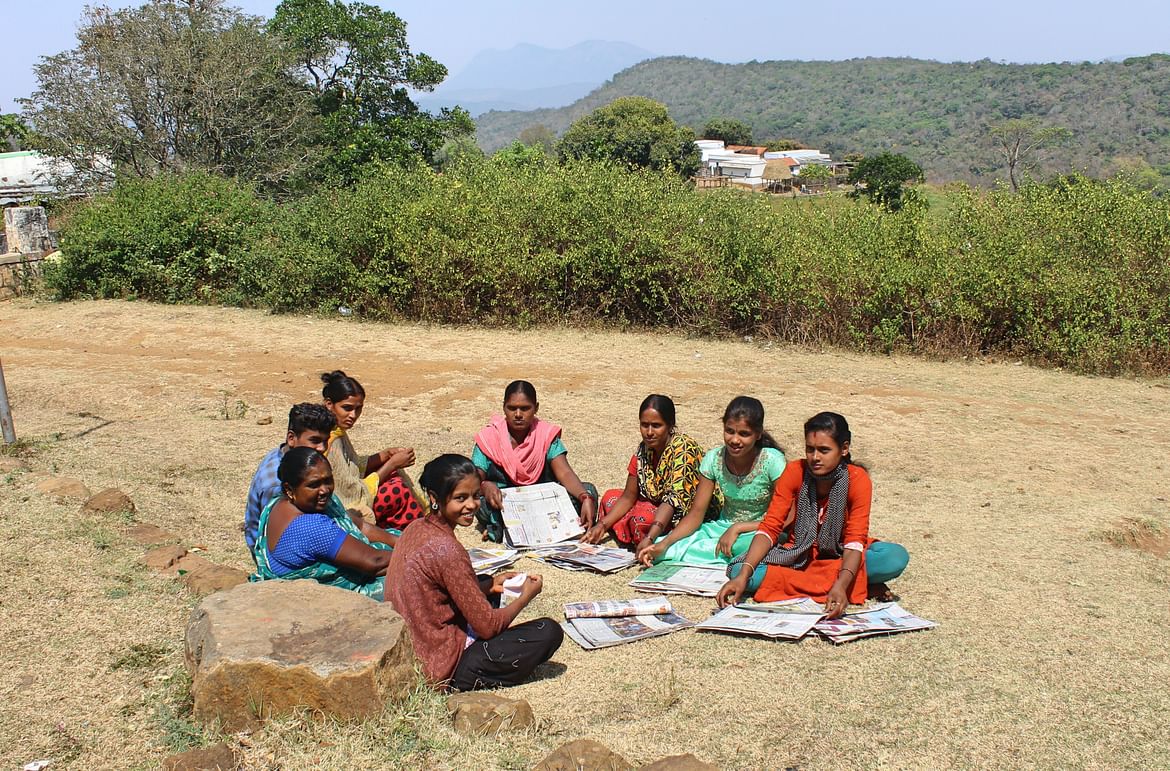
Women for Conservation -
Currently operational in the remote, picturesque village of Kokkabare in MM Hills Wildlife Sanctuary, this collaborative project aims to equip the women with a creative multi-faceted solution that has long term benefits for the communities, forests and wildlife, while focusing on reducing human-wildlife conflict and improving peoples’ perceptions of wild animals and conservation.
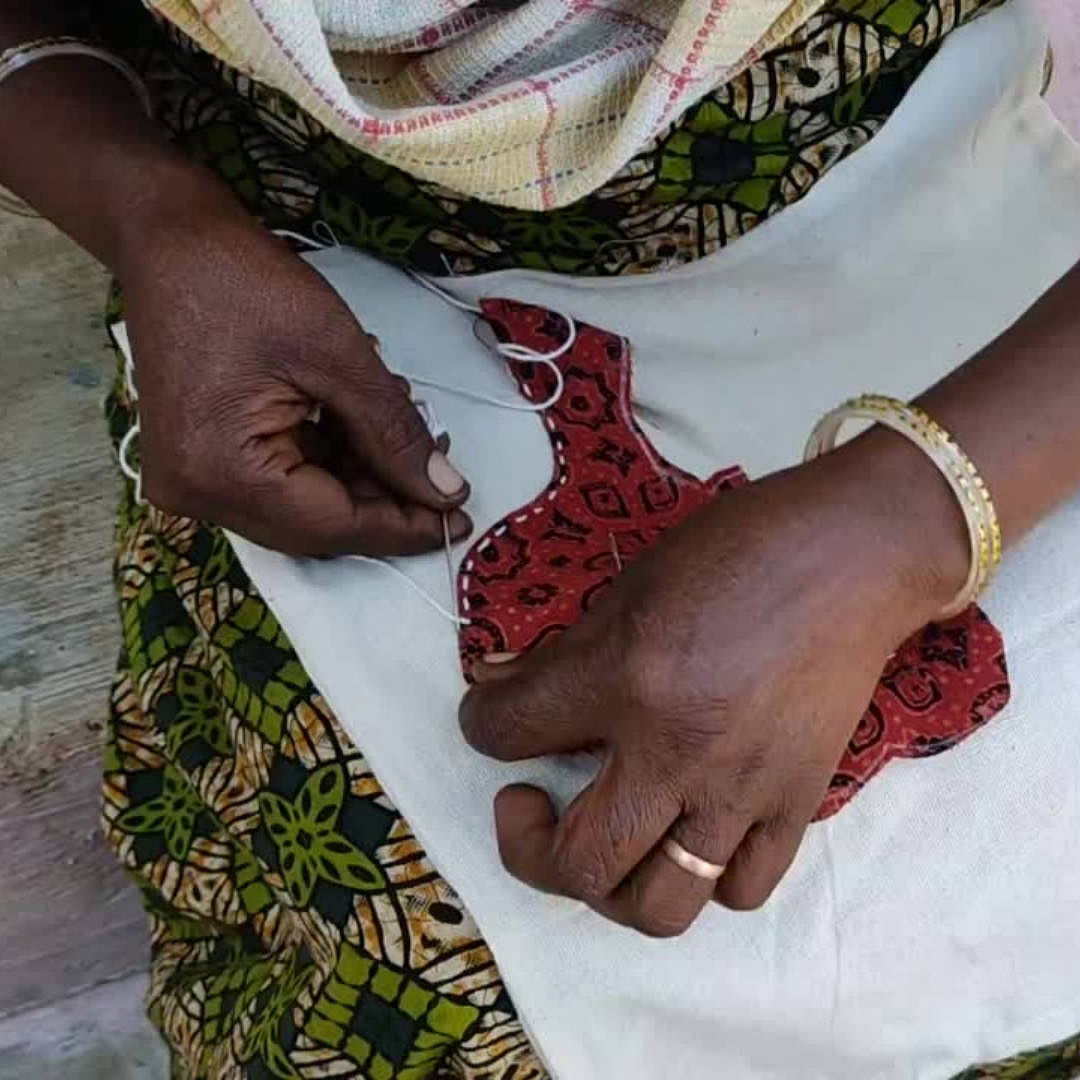 Krishna Murthy, the creative and training advisor for the initiative, handles the product design, and training and skill development. The women have received training on hand-stitching, machine sewing, embroidery and screen printing so far, successfully hand-crafting products like different kinds of bags and masks that are market viable and bringing in revenue from different fronts.
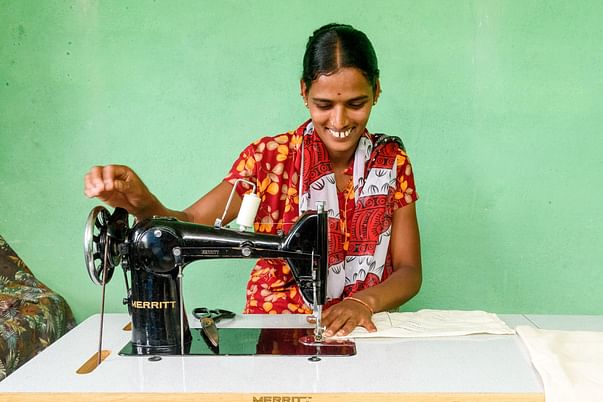 This activity provides a sustainable solution by saving resources for wildlife and helping people with alternative incomes.
Krishna Murthy, the creative and training advisor for the initiative, handles the product design, and training and skill development. The women have received training on hand-stitching, machine sewing, embroidery and screen printing so far, successfully hand-crafting products like different kinds of bags and masks that are market viable and bringing in revenue from different fronts.This activity provides a sustainable solution by saving resources for wildlife and helping people with alternative incomes.