 Share
Share

HAMARI PAHCHAN NGO
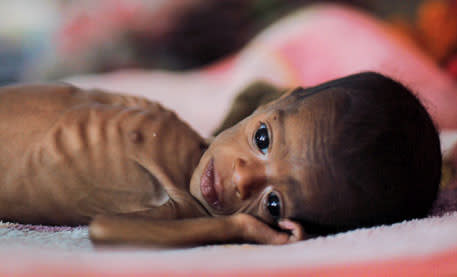
MALNUTRITION
Many families cannot afford or obtain enough nutritious foods such as fresh fruits and vegetables, legumes, meat, and milk, whereas foods and beverages high in fat, sugar, and salt are cheaper and more readily available, resulting in a rapid increase in the number of overweight and obese children and adults in both poor and wealthy countries. It is not uncommon to discover undernutrition and obesity in the same neighbourhood, household, or even individual - for example, it is conceivable to be overweight and micronutrient deficient.
Corinna Hawkes, co-chair of the Report and Director of the Centre for Food Policy, said: “The figures call for immediate action. Malnutrition is responsible for more ill-health than any other cause. The health consequences of overweight and obesity contribute to an estimated four million deaths, while undernutrition explains around 45% of deaths among children under five. The uncomfortable question is not so much “why are things so bad?” but “why are things not better when we know so much more than before?”
A report by the World Bank describes not only the physical wasting wrought by malnutrition, but the wasting of vast financial resources being made available to address the problem. While India has taken the problem of malnutrition seriously and has developed appropriate policies and mounted large-scale programs to address it, says the report, these efforts are having relatively limited impact on nutrition among the poor.
"While mortality has declined by half and fertility by two-fifths, malnutrition has only come down by about one-fifth in the last 40 years. The inescapable conclusion is that further progress in human development in India will be difficult to achieve unless malnutrition is tackled with greater vigour and more rapid improvement in the future than in the past," says report co-author Anthony Measham with SASHP.
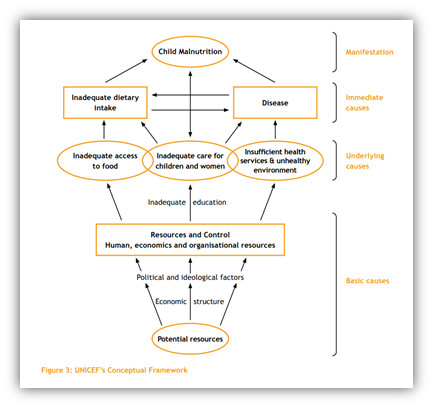
Malnutrition rates are highest among children and women in particular sections of the country, owing to insufficient food intake, sickness, and detrimental childcare practises such as delayed supplemental feeding. Household food insecurity, poor preventative and curative health services, and a lack of awareness of basic treatment are at the root of these issues.
Malnutrition is a major impediment to further lowering maternal death rates. Malnutrition can also have a negative impact on cognitive development and learning achievement during the preschool and school years, resulting in decreased productivity. Low physical and mental performance have been linked to nutritional anaemia.
"Malnutrition not only blights the lives of individuals and families, but also reduces the returns on investment in education and acts as a major barrier to social and economic progress," says Meera Chatterjee, a World Bank senior social development specialist.
Because of ineffective targeting, execution, and coverage, the Public Distribution System (PDS), an Integrated Child Development Services (ICDS) programme, a National Mid-day Meals Program (NMMP), and many employment schemes providing food for work failed to satisfy the requirements of the poorest.
While the PDS, for example, consumes 0.5 percent of GDP, it does not reach the people who need it the most. Furthermore, direct nutritional programme spending, which includes the ICDS, NMMP, and micronutrients programmes, now accounts for only 0.19 percent of GNP.
A comprehensive policy implementation structure, as well as persistent political commitment, contribute to the problem of malnutrition. India must also improve the quality and impact of its nutritional programmes by properly targeting them. It will be critical to decentralise programme implementation and involve local government bodies heavily. To have a significant impact, all nutritional interventions must reach households living below the poverty line.
The Malnutrition Crisis in India identifies priority measures within existing nutrition, food distribution, and health programmes in India. The cost of the proposed interventions, according to the authors, would be quite moderate compared to the economic and social toll malnutrition exacts each year, roughly $80 million per year for ten years.
https://pib.gov.in/Pressreleaseshare.aspx?PRID=1695200#:~:text=Government%20implements%20Anganwadi%20Services%2C%20Pradhan,of%20malnutrition%20in%20the%20country.

MALNUTRITION
- What is malnutrition?
- What are the causes of malnutrition?
- What are the ramifications of malnourishment?
Many families cannot afford or obtain enough nutritious foods such as fresh fruits and vegetables, legumes, meat, and milk, whereas foods and beverages high in fat, sugar, and salt are cheaper and more readily available, resulting in a rapid increase in the number of overweight and obese children and adults in both poor and wealthy countries. It is not uncommon to discover undernutrition and obesity in the same neighbourhood, household, or even individual - for example, it is conceivable to be overweight and micronutrient deficient.
- Worldwide effect of malnutrition.
Corinna Hawkes, co-chair of the Report and Director of the Centre for Food Policy, said: “The figures call for immediate action. Malnutrition is responsible for more ill-health than any other cause. The health consequences of overweight and obesity contribute to an estimated four million deaths, while undernutrition explains around 45% of deaths among children under five. The uncomfortable question is not so much “why are things so bad?” but “why are things not better when we know so much more than before?”
- Effect on India due to malnutrition
A report by the World Bank describes not only the physical wasting wrought by malnutrition, but the wasting of vast financial resources being made available to address the problem. While India has taken the problem of malnutrition seriously and has developed appropriate policies and mounted large-scale programs to address it, says the report, these efforts are having relatively limited impact on nutrition among the poor.
"While mortality has declined by half and fertility by two-fifths, malnutrition has only come down by about one-fifth in the last 40 years. The inescapable conclusion is that further progress in human development in India will be difficult to achieve unless malnutrition is tackled with greater vigour and more rapid improvement in the future than in the past," says report co-author Anthony Measham with SASHP.
Malnutrition rates are highest among children and women in particular sections of the country, owing to insufficient food intake, sickness, and detrimental childcare practises such as delayed supplemental feeding. Household food insecurity, poor preventative and curative health services, and a lack of awareness of basic treatment are at the root of these issues.
Malnutrition is a major impediment to further lowering maternal death rates. Malnutrition can also have a negative impact on cognitive development and learning achievement during the preschool and school years, resulting in decreased productivity. Low physical and mental performance have been linked to nutritional anaemia.
"Malnutrition not only blights the lives of individuals and families, but also reduces the returns on investment in education and acts as a major barrier to social and economic progress," says Meera Chatterjee, a World Bank senior social development specialist.
- Action taken worldwide to tackle malnutrition
- Problems faced worldwide to tackle malnutrition
- Stunting in children under the age of five is on the decline globally, but it is on the rise in Africa, with major inequalities in development at the subnational level. Stunting has decreased from 32.6 percent of all children under the age of five years in 2000 to 22.2 percent in 2017. In terms of numbers, this represents a drop from 198.4 million to 150.8 million. Since 2000, stunting among children in Asia has decreased from 38.1 percent to 23.2 percent, while it has decreased from 16.9 percent to 9.6 percent in Latin America and the Caribbean. Stunting among African children has dropped in percentage terms from 38.3 percent to 30.3 percent over the same time period, while the actual number of stunted children has increased due to population expansion.
- At the worldwide level, progress in addressing underweight and anaemia among women has been extremely slow, while adult overweight and obesity is on the rise, with women having greater obesity rates than males. Women's underweight has decreased marginally, but not dramatically, since 2000; 9.7% of women (ages 20–49) and 5.7 percent of teenage girls (ages 15–19) are still underweight. The percentage of people who are anaemic has increased marginally to 32.8 percent. Since 2000, the global prevalence of overweight (BMI 25) and obesity (BMI 30) has risen year after year. Obesity is more common in women than in men, at 15.1 percent versus 11.1 percent.
- Several nations are on track to fulfil at least one of the universally agreed-upon nutrition standards by 2025, but the majority are falling behind and none are making progress on the entire set of goals. 94 of the 194 nations covered in the 2018 assessment of progress against nine targets, which includes new data points from 32 countries, are on pace to reach at least one nutrition target, with 44 of them on track to meet one target and 35 on track to meet two. 24 nations are on track to meet the stunting target, 37 countries are on track to meet the wasting target, and 18 countries are on track to meet both the stunting and wasting targets. As a result, most countries' data is out of date. No country is on track to achieve the adult obesity target, nor to reach the anaemia target. Just five countries are on track to meet four targets – the maximum number of targets any country is on track for.
- Different types of malnutrition continue to compound one another, with fresh research supporting this. A new study of the numerous burdens of malnutrition within countries is revealing new information on the extent to which countries and people are affected by multiple forms of malnutrition. 88 percent (124 countries) of the 141 countries with consistent data on three categories of malnutrition — childhood stunting, anaemia in women of reproductive age, and overweight among women – have high levels of at least two, with 29 percent (41 countries) having high levels of all three. The majority of the 41 countries (30 of them) are in Africa. Millions of children are afflicted by coexisting burdens, with 15.95 million children suffering from wasting and stunting, which raises the risk of child mortality, and 8.23 million children suffering from stunting and obesity.
- Global crises are becoming more protracted, making it difficult to combat all forms of malnutrition. There is an urgent need to treat and prevent numerous burdens of malnutrition in circumstances of crisis deriving from conflict, fragility, violence, and environmental change, as well as to build nutrition resistance to what are frequently protracted crises. Although an estimated 86 percent of international humanitarian assistance goes to nations in long and medium-term disaster, the majority of it is in the form of short-term programmes. The humanitarian world is beginning to modify its techniques to address longer-term and context-specific action as the significant burden of different kinds of malnutrition in these protracted situations becomes more widely recognised. To address the full impact of malnutrition in these most vulnerable and complex circumstances, humanitarian and development groups will need to work more closely together to establish long-term nutrition resilience.
- The 2018 assessment of progress against nine targets reveals only 94 of 194 countries are on track for at least one of the nine nutrition targets assessed. This means that most countries are significantly off-track on meeting all nine targets
- No country is on course to meet all nine targets.
- Only five countries are on track to meet four of the nine targets – which is the most any country is on track for.
- No country is on track to achieve the adult obesity target for men or women, nor reach the anaemia target.
- Only 26 countries are on track to reach the target for women’s diabetes.
- Action taken in India to tackle malnutrition
- Problems faced in India to tackle malnutrition
Because of ineffective targeting, execution, and coverage, the Public Distribution System (PDS), an Integrated Child Development Services (ICDS) programme, a National Mid-day Meals Program (NMMP), and many employment schemes providing food for work failed to satisfy the requirements of the poorest.
While the PDS, for example, consumes 0.5 percent of GDP, it does not reach the people who need it the most. Furthermore, direct nutritional programme spending, which includes the ICDS, NMMP, and micronutrients programmes, now accounts for only 0.19 percent of GNP.
A comprehensive policy implementation structure, as well as persistent political commitment, contribute to the problem of malnutrition. India must also improve the quality and impact of its nutritional programmes by properly targeting them. It will be critical to decentralise programme implementation and involve local government bodies heavily. To have a significant impact, all nutritional interventions must reach households living below the poverty line.
The Malnutrition Crisis in India identifies priority measures within existing nutrition, food distribution, and health programmes in India. The cost of the proposed interventions, according to the authors, would be quite moderate compared to the economic and social toll malnutrition exacts each year, roughly $80 million per year for ten years.
- Measures that can be taken worldwide to eradicate malnutrition
- The world is off track but the opportunity to end malnutrition has never been greater, nor has the duty to act.
- To translate solutions into action, following are the critical steps to be taken:
- Breaking down existing silos to tackle malnutrition in all its forms.
- Prioritizing and investing in data to identify key areas of action.
- Scaling up and diversifying funding for nutrition programmes.
- Immediately taking action on healthy diets by making healthy foods affordable across the globe.
- Implementing more ambitious commitments that are designed for impact through SMART targets.
- Measures that can be taken in India to eradicate malnutrition
https://pib.gov.in/Pressreleaseshare.aspx?PRID=1695200#:~:text=Government%20implements%20Anganwadi%20Services%2C%20Pradhan,of%20malnutrition%20in%20the%20country.
- Are we better equipped to eradicate malnutrition?
- We now have a better understanding of what people eat, why it matters, and what can be done to improve diets. In Mexico, a two-year review of the sugar-sweetened beverage tax found that sales of targeted beverages declined by 9.7% across the population, relative to predicted sales if the policy had not been introduced.
- New data can change the game and lead to more effective action. Data and action at the local level have been extremely beneficial. In 2012, Amsterdam was dealing with an obesity issue among its youth. The city kept track of childhood obesity in different districts and pushed it to the top of the priority list. Late in 2012, ambitious goals were set. Creating public drinking fountains, implementing restrictions on food advertising, and publishing guidance for healthy snacks in schools are among the actions broken down by prevention (such as healthy urban design), cure (such as helping those who are already overweight), and facilitation (such as learning and research). Obesity and overweight are on the decline in the city today.
- We see countries putting together multi-sectoral programmes to meet their goals. Tanzania has chosen a wide variety of targets, totalling seven, including stunting, anaemia, and low birth weight. These goals are part of a five-year action plan aimed at reducing the many consequences of malnutrition. The plan was put in place under the direct supervision of the Prime Minister's office to minimise all forms of malnutrition, including deficiency and excess/imbalances. Its overall purpose is to increase the scope of high-impact interventions for the most vulnerable individuals, such as children under the age of five, teenage females, and pregnant and lactating women. It accomplishes this through urging action in a variety of areas, including social protection, education, and food.
- Governments are demonstrating their commitment and taking the initiative to take action. China's government is dealing with the world's second-largest undernourished population, with significant increases in overweight and obesity, as well as diet-related noncommunicable diseases (NCDs) including diabetes. To combat this, it has devised two strategies that could alter China's nutritional situation. Healthy China 2030 (2016), which was developed with the direct involvement of China's President, demonstrates a strong governmental commitment to improving the health of Chinese residents. A year later, the government announced a revised National Nutrition Plan (2017–2030) with a variety of malnutrition targets for vulnerable populations, including stunting, obesity, anaemia, breastfeeding, and folic acid insufficiency. The emerging nutrition governance structure deserves credit for demonstrating what institutional coordination may achieve in terms of political and administrative commitment to food and nutrition security.